Blog / Vehicle Maintenance

Blog

All Vehicle Maintenance Wakefield Mazda Dealer Wakefield Mazda Service Vehicle Safety Things to do in Wakefield Fun places in Rhode Island Mazda CX-5 Mazda3 Things to do near Wakefield Mazda CX-9 Vehicle Advice Restaurants near Wakefield Vehicle Financing Mazda CX-30 Mazda Miata Mazda6 Mazda CX-3 Mazda MX-5 Miata New Mazda3 near Wakefield Mazda3 Hatchback New Mazda6 in Wakefield Family activities New Mazda Miata MX-5 in Wakefield RI
6_Car_Maintenance_Tips_Every_Mazda_Owner_Can_Use_637509719691260099

6 Car Maintenance Tips Every Mazda Owner Can Use

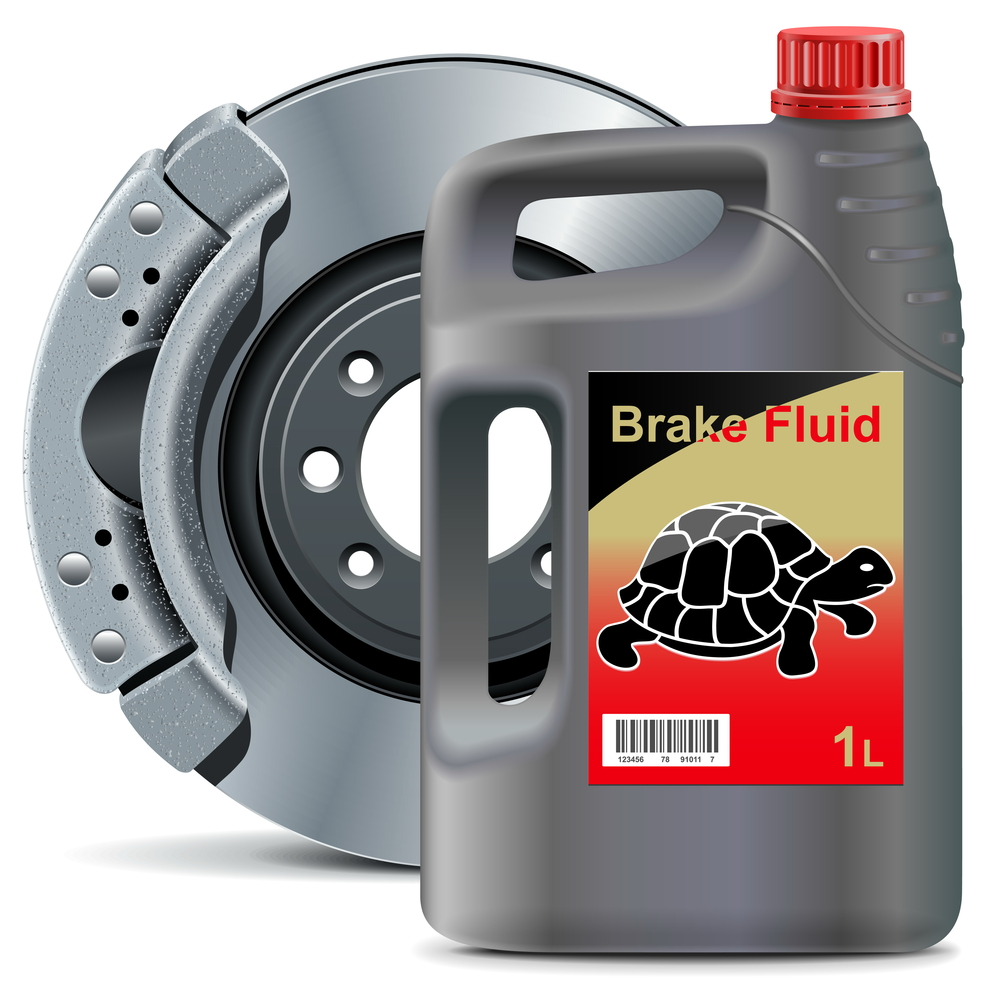
It's important to keep up with maintenance if you want your Mazda to last. It might not be fun, but it's necessary in order to minimize your chances of bigger problems down the road. Below are six car maintenance tasks you should perform regularly to keep your vehicle running optimally and extend its life for as long as possible. more Test the Air Pressure in Your Spare Tire Once a Month Whether due to road hazards or simply wear and tear, flat tires happen. While a flat tire isn't the most serious of car problems, the last thing you want to do is pop open your trunk to find that your spare tire is flat, too. You should check the air pressure in your tires, and your spare, once a month. Check Your Brakes You want your car to stop and go as efficiently as possible to keep yourself and any passengers safe. If you hear a squealing sound when you hit the brakes, it may be because your brake pads are wearing out. Worn-out brake pads will cause your vehicle to decelerate slower than it normally would, putting anyone inside at risk. Make sure to have your brakes and brake fluid checked whenever you change your oil, or if you hear high-pitch screeching when you press on the brakes. Don't Neglect the Battery A strong, functioning battery is necessary to keep your car running at full speed. Unfortunately, the battery is a part of the vehicle few pay attention to until it dies. Check regularly for corrosion, a white or bluish substance that forms on your car battery's terminals. If you notice corrosion starting to build up, you can disconnect your battery from your vehicle and use a small wire brush to clean the terminals. Get Your Oil Changed Regularly Issues with your motor's oil, whether it's too dirty or too low, can lead to a host of expensive repairs. Check out your owner's manual to find out when to change your oil and which oil to use. If you're unsure, a good rule of thumb is to get your oil changed every 5,000 miles. Check or Change Your Air Filter If you've ever wondered how your vehicle keeps dirt, dust, and tiny particles in the air out of your engine, it's because of your air filter. It's an extremely important job and one in which you want your air filter to perform well. Change your air filter once a year, or at least every 12,000 miles. Rotate Your Tires No matter how new or high-quality your tires are, they're going to wear down eventually, and all of your tires won't wear down at the same rate, or even in the same areas. You can save several hundred dollars on new tires by rotating the ones you have every 3,000 to 5,000 miles. The lifespan of your vehicle will depend on how well you take care of it. Regular maintenance may be a pain in the neck sometimes, but taking the time to inspect important areas of your vehicle, and spending a few dollars now, can significantly extend the life of your car and save you a bundle later on. If you'd like to know more about how you can take care of your vehicle, contact Flood Mazda in Wakefield, RI today.

Top_4_Advantages_of_Getting_Winter_Tires_for_Your_Car_637504445056912685

Top 4 Advantages of Getting Winter Tires for Your Car

Many drivers choose to rely on all-season tires to get them through tough winter conditions. Naturally, "all-season" means that you're covered for the winter season, too, right? Not quite. Winter tires offer several advantages when dealing with cold road surfaces, snow, and ice. They can potentially save you quite a bit of money, as well. more 1. Better Handling on Icy Cold Surfaces Unlike all-season tires, they're made with a softer rubber compound that resists hardening at freezing temperatures. Tires need to be flexible in order to grip the road, but that flexibility is drastically reduced during the winter. The softer compound allows the tire to maintain traction and keep you on the road. Better traction in the winter will allow your car to brake more responsively and quickly, improve acceleration, and limit sliding while cornering. 2. Wider Treads for Snow They're also called snow tires because their wider tread grooves are specifically designed to take on more of the white stuff. Snow crystals will adhere to themselves a lot better than they will to rubber (think packing a snowball), so the layer collected by the tire will actually help it to grip snowy surfaces much more easily. Just as softer rubber allows for shorter braking distances, reduced wheelspin, and more confident turning on icy roads, wider treads will do the same when heavy snowfall hits. 3. Two Sets for Longer Tire Life Having both an all-season and a winter driving set may seem quite costly upfront, but you're actually extending service life while using each set for more appropriate driving conditions. The Federal Highway Administration states that Americans drive an average of 13,500 miles each year (1,125 per month). If you spend four months out of the year on a winter set, your all-season set may last an extra two to three years thanks to reduced wear and tear. Not only will your tires last longer, but your vehicle will also always be properly equipped to handle road conditions. The real main cost would be service fees for switching the tires on your wheels or buying an extra set of wheels to fit new tires. 4. You Could Be Saving Money Your chances of being involved in an auto collision significantly increases when driving during harsh winter conditions. These accidents often end up being quite costly and may increase your insurance premiums as a result. Using tires designed to handle ice and snow combined with good winter driving techniques will help you to avoid these types of incidents. Depending on your state and insurance agency, you may also be offered a discount for equipping your vehicle with winter/snow tires. Most importantly, you could be saving yourself and your passengers from medical bills costing hundreds of thousands. Having a winter set of tires is an excellent investment that can help keep you and others safe, reduce maintenance costs, and provide excellent handling when the roads are cold and slippery. Head to Flood Mazda and we'll help you choose the right tires for your vehicle.

What_Should_You_Expect_From_a_Transmission_Repair_637486169080545909

What Should You Expect From a Transmission Repair?

Your vehicle is a huge investment and so important in your day-to-day life. It needs to be reliable, efficient, safe, and worry-free. We know Mazda owners hold their vehicles to lofty standards in terms of a quality ride, not to mention the highest standards of care and customer service. Read on below for insight on what you can expect from transmissions issues, and how we are committed to providing the right option for you. more Transmission Repair: Why It's Important The transmission is the heart of a properly functioning vehicle, making sure the engine isn't working too hard and properly shifting gears, to name just a few things it does. There are a number of red flags that may indicate a transmission needs to be repaired or even replaced. Whether it's leaking fluid, a burning smell, or unusual noise coming from the transmission, you'll want to bring it into a service center as soon as possible. Types of Transmission Repair Our certified technicians, who go through frequent training, have the latest diagnostic tools which will be able to provide an accurate assessment of your vehicle. They will hook the vehicle up to computers in the service bay that will output diagnostic trouble codes (DTC's) to pinpoint the issue that goes into the vehicle health report. Of course, technology and tools can only go so far, so we have our technicians visually inspect and confirm what the codes tell us when we are underneath your vehicle. How Long Does the Repair Take? Transmissions are complex with a number of small parts and have been increasingly computerized over the last number of years. If it's a minor issue like a faulty sensor, the transmission will not have to be completely removed from the vehicle and it could take as little as a single service day to complete. For more complex issues where the transmission needs to be removed and intricate parts cleaned or replaced, it could potentially take several days. Either way, we will keep you informed and in the loop every step of the process. The Highest Quality Parts Transmissions are very complex machines, and you might have many questions on the repair and parts themselves. Because there are so many reasons why your transmission might need to be repaired, the cost varies, as well. What will not vary, however, is our firm commitment to the highest quality, premium OEM parts specific to your model and transmission. We will be transparent on whether a part needs to be replaced due to wear and tear, or cleaned and serviced, and any other option that makes sense for your vehicle.   Although transmissions have a longer life span depending on regular maintenance, bad things can still happen. Be assured that getting your transmission serviced is an important and critical maintenance item for your vehicle. If you have any concerns or questions, contact or journey down to Flood Mazda today for exceptional expertise and service.

How_Often_Will_Your_Mazda_Need_a_New_Car_Battery_637466342172071774

How Often Will Your Mazda Need a New Car Battery?

Whether you've just purchased your Mazda, or you've been an owner for a while, eventually, you're going to need a new car battery. Here is how often you'll need to replace your battery and signs that your battery could be failing. There are many factors that go into the life of a car battery, including the terrain you drive on, your climate, how many jump-starts you've needed, and how well you maintain your battery; but in general, we recommend that you replace your car's battery every four or five years. more You can get a new battery at your dealership's service center, where you'll always get the exact part recommended for your specific vehicle and stellar service from a factory-trained technician. Factors That Shorten a Battery's Life Terrain Vibrations break down a battery's internal parts, so if you drive on rough terrain frequently, your battery is likely to fail sooner than if you travel on highways and other paved roads. Always make sure your battery's clamps are as tight as possible to prevent vibration during normal driving conditions and to minimize vibrations on rougher terrain. Climate Living in a hot climate will cause you to have to replace your car's battery more often than if you lived in a cold environment. The reason behind this is that heat causes the liquids contained in a car's battery to evaporate. Without these liquids, the battery cannot function and will need to be replaced. Unfortunately, these fluids cannot be refilled, so you'll have to get a new battery when this happens. Jump Starts Each time you get your car jump started because the battery's charge has run down, you shorten your battery's life. As such, always make sure to turn your headlights off, don't leave your interior lights on, and get all electrical issues repaired right away. If you have a defective alternator, you'll also need to get that fixed or replaced as well. Otherwise, it will fail to charge your battery, requiring a jump start. Poor Maintenance You also need to take care of your battery to make sure it can be charged properly when your vehicle is running. Make sure corrosion does not build up on the terminals and that the clamps that hold your battery stay tight. Every six months or so, check the acid levels to check for acid stratification, which will prevent your battery from receiving a full charge. Keep your battery cables tied so they don't move around and become loose. Signs Your Battery Is Failing The best way to know if you need a new battery is to bring your car in to have the battery tested at your service center. Otherwise, you might notice your headlights are dim or flickering, you have to jump-start your car often, your engine hesitates before starting, or you notice other electrical components experiencing power fluctuations. Any of these signs should get you into the service center as soon as possible. If your battery dies completely, you'll be stranded. Don't let this happen to you. Bring your car into Flood Mazda today for a battery inspection.

10_Top_Signs_Your_Mazda_Needs_a_Brake_Repair_637430350272431128

10 Top Signs Your Mazda Needs a Brake Repair

The most crucial safety feature of your car is the brakes. The braking system helps you to control your speed and is vital in emergencies when you need to brake suddenly to avoid an accident. Always be on the lookout for the following signs, and when you experience any of these warnings, get a brake repair asap. 1. Brake Warning Light If the brake light on your dashboard stays on, don't ignore it. This means that there is a problem with your braking system and it needs to be repaired. more 2. Squealing and Screeching Sounds This is quite an alarming sound, but actually, it is only a warning that your brakes are worn. There is a little piece of metal built into the brake pads that make a sound when it touches the rotors. 3. High-Pitched Noises Screeching noises can also be an indication that your rotors are glazed. If you see dark rings or marks on the rotors, they need replacing. This is caused by hard braking at high speeds. 4. Metallic Grinding Sounds If you do not attend to those squealing and screeching noises, the next sound you will hear is a horrible grinding noise. The brake pads are now completely worn down and what you hear is the metal plate against the rotor. To avoid accidents, don't ignore this sign. 5. Slow Brakes You are stepping on the brake, but your car responds slowly. It could mean that your brake pads and rotors are old and worn and don't grip well. It could also be an indication that there is an air leak in the brake hose. Your car could be low on brake fluid, the fluid is old, or there is a leak. 6. Leaking Fluids and Air If the braking system's hoses are split, the connections are loose, or the seals are worn, fluid can leak out. You will also feel that your car is slow or lazy to come to a halt. Check under your vehicle for spots and stains and if you see a dark mark, get the leaked fixed soon. 7. Thin Pads If the brake pads are less than a quarter-inch thick, your car needs new brake pads. Some brake pads also have a wear indicator in the middle, and when the groove is worn down, the brake pads need replacing. 8. Vibrations When you feel vibrations through the brake pedal or the steering wheel, it is caused by warped rotors. When rotors are old and thin, they get warped and need to be replaced. 9. Sensitive Brakes When your car jerks when you stop, it could be a sign that you need new brake fluid or that your rotors are worn. Have your vehicle inspected by a technician. 10. Pulling Left or Right When you brake, and you can feel your car is pulling to the left or the right, the brakes are worn more on one side than the other, and they need to be adjusted. This could also be caused by dirty brake fluid. You must have your brakes checked by a skilled technician regularly to keep you, your passengers, and other drivers safe on the road. Contact Flood Mazda today. Our expert technicians will make sure your vehicle performs at its best.

4_Reasons_to_Order_Your_Replacement_Mazda_Parts_Through_a_Dealer_637432798380905485

4 Reasons to Order Your Replacement Mazda Parts Through a Dealer

Your Mazda dealer has all the knowledge, equipment, and parts to keep your Mazda in excellent running condition. The key to excellent vehicle performance, reliability, and safety is high quality, genuine ​ Mazda parts ​​​, installed correctly by qualified technicians at an authorized Mazda Service Center. 1. We Stock Quality, Genuine Parts The advantage of ordering your replacement parts at a Mazda dealer is that we guarantee you complete peace of mind. Our OEM (Original Equipment Manufacturer) automotive parts are the official,  genuine parts produced by Mazda. more These high-quality parts are designed and engineered specifically for the model you own and guaranteed to make your vehicle perform optimally. Our parts are corrosion resistant, safe, and covered by the Mazda warranty. 2. Replacement Parts and Accessories Warranty Coverage Mazda is designed and built with care, and because we are confident in the quality of our vehicles and parts, we want to help you take care of your investment. We offer a Replacement Part and Accessories Warranty that covers all our parts for 12 months or 1,000 miles, whichever comes first, from the date of the installment. The warranty also covers the labor costs for the removal and replacement of the part at an authorized Mazda dealer. Mazda also offers a specialized Brake Warranty that covers all brake pads and shoes. We have a 36-month free Battery Replacement Warranty and an Accessories Limited Warranty. Inquire about the details of the warranties when you visit us or look on our website for warranty details on OEM replacement parts and installations and make sure you stay covered. 3. Special Deals on Genuine Parts Because our customers and their cars are important to us, we want to help you to maintain your vehicle and keep it running smoothly. That is why, when it's time to replace a part, we offer a wide range of money-saving specials and deals on services and genuine parts. So, before you purchase parts, ask us about discounts and specials. Also, have a look at our part specials on our website under Service Specials for fantastic savings on genuine parts and services. 4. We Will Help You Choose the Right Parts for Your Car To find out exactly what parts and services your Mazda needs, let one of our Mazda-trained technicians perform a complimentary Comprehensive Full Circle Service inspection. They specialize in maintaining your vehicle and receive ongoing training to stay up to date on all the models and service requirements. You will receive a Report Card with details on any maintenance, repairs, and replacement parts your Mazda may need. Our technicians are highly skilled and meticulous and only fit genuine OEM parts. Get the best out of your Mazda and order genuine, quality parts at a dealership. Our trained technicians, who know your Mazda well, will perform quality repairs, fitments, and services. Contact Flood Mazda today. We have everything your Mazda needs to always perform at its best and keep you and your passengers safe on the road.

8_Mazda_Maintenance_Tips_to_Keep_Your_Car_in_Perfect_Shape_637411166618639687

8 Mazda Maintenance Tips to Keep Your Car in Perfect Shape

Taking good care of your car is essential. Stick to the prescribed service intervals and performing basic Mazda maintenance yourself regularly. This will keep your Mazda in excellent condition, extend the life of your vehicle, and reduce repair costs. Here are some tips to take good care of your car. 1. Read the Mazda Owner's Manual Everything you need to know about keeping your car in good running order is in your owner's manual. Read the manual and familiarize yourself with the prescribed service intervals and other maintenance information. more 2. Regular Services Good maintenance begins with regular services at a Mazda dealership. You will find the Maintenance Schedule in the manual. We strongly recommend that you take your vehicle for a service at the prescribed intervals. A certified technician will inspect your vehicle and do the necessary maintenance and repairs to keep your car performing well. 3. Inspect the Tires Monthly Always keep your car's tires at the correct pressure to reduce wear and tear and to increase fuel-efficiency. Don't forget to check your spare too. Check for cracks, bulges or bubbles, and tire tread depth. If you spot deep cracks and bubbles, get the tires replaced immediately. Worn or damaged tires are a safety hazard and could cause accidents. 4. Check the Fluids Your car needs all kinds of fluids to operate optimally. Check the coolant, brake, power steering, and transmission fluid regularly. Check the oil level every month. It is essential to keep the moving parts lubricated for the engine to run well. Always choose quality oil that is best for your vehicle. 5. Check for Leaks When you reverse out of your garage, always check to see if there are any spots on the ground. If you see a stain, the type of fluid can be identified by the color. A dark brown or black spot is usually oil, reddish-brown is transmission fluid, red is power steering fluid, and brake fluid is a yellow to brown color. Ask a Mazda technician to determine where the leak is coming from and to fix the problem. 6. Test the Lights Ask a friend or a family member to help you check the lights. Turn on the different lights and blinkers and make sure all the lights are working. It's always best to get a broken light repaired immediately. 7. Inspect the Windshield Wipers and Blades Check that the wipers and blades are in good condition. The moment the wipers are not working well, ask a technician to fix the problem. Replace worn blades as soon as you can. Wipers that do not work as they should reduce visibility and can lead to road accidents. 8. Keep Your Car Clean Wash and wax your car regularly to protect the paintwork. A good wax will protect the bodywork and reduce rust, chips, and scratches. It will also keep road dirt and dust away from the engine. If you check the above regularly and take your car for services when they are due, you will spot problems quickly and save on repairs. Visit Flood Mazda today. We will make sure that your car is running at its best and that you are safe on the road.

Mazda_Radiator_Repair_4_Pitfalls_of_Ignoring_a_Damaged_Radiator_637413638691635565

Mazda Radiator Repair: 4 Pitfalls of Ignoring a Damaged Radiator

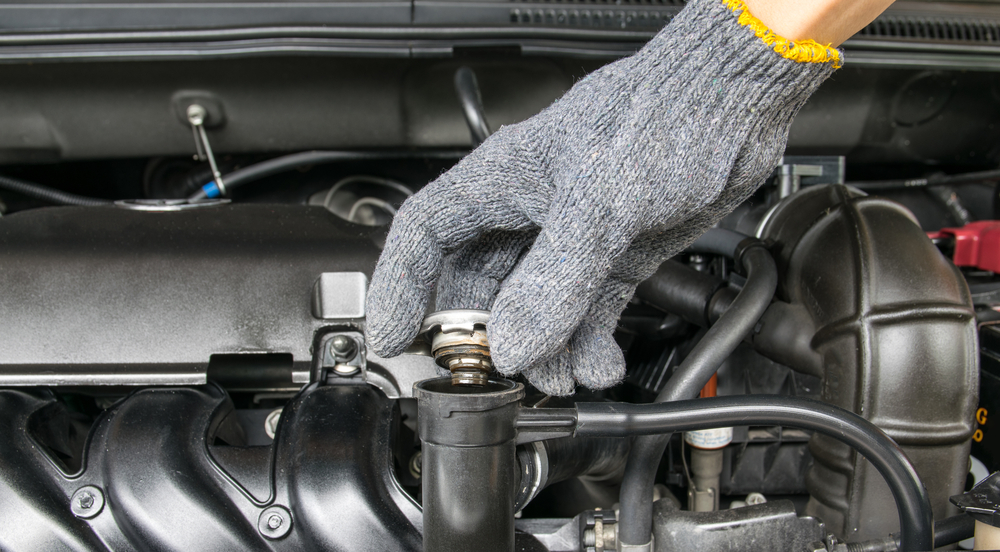
As vehicles continue to evolve, the need for car owners to inspect the inner workings of their engine compartments has steadily diminished. Most owners would reluctantly admit they couldn't identify their radiator, much less name the critical functions a radiator serves. But, a damaged radiator is no laughing matter and could leave you stranded on the side of the road. Read on to discover four pitfalls of not getting your radiator repaired. more 1. Engine Overheating Your engine can withstand a certain degree of high temperatures. But, when the radiator is damaged, your engine can quickly overheat, even with minimal use and gentle driving. An overheating engine can boil the remaining coolant in the radiator system, causing hoses to loosen from their fittings, swell, and eventually burst, spraying boiling coolant on critical engine components. Also, the unchecked temperature from an overheating motor can warp aluminum engine cylinder heads leading to decreased power, misfiring, and excessive oil consumption. Most importantly, excessive heat can lead to a blown head gasket, allowing oil and coolant to mix and circulate throughout your entire motor, ultimately destroying your engine, transmission, and other associated critical components. 2. Transmission Damage Coolant is not only critical to your engine's life but can also be tied to the health of your transmission. When a radiator is damaged, you may begin to notice your transmission having difficulty shifting or hard shifting. If your vehicle has an integrated transmission cooler, the rough shifting occurs from transmission fluid becoming contaminated with coolant. 3. Cabin Heater Not Working On a cold Monday morning commute, the last thing anyone wants to experience is no heat to battle the frigid air. Lack of cabin heat is a common sign of a damaged or malfunctioning radiator. Your cabin heater is reliant on a hot coolant passing through the heater core, producing hot air that is blown onto you and your passengers. Don't ignore this symptom or else you might get left out in the cold at the worst possible time. With a certified technician, a simple repair could easily address a coolant leak or clog, getting your heat back up and running in no time! 4. Damaging the Environment All of that leaking coolant has to go somewhere. Often leaking coolant ends up in a puddle underneath your vehicle and can easily seep into the ground and ultimately, the local water supply. Ingesting coolant can cause serious damage to the nervous systems of humans and animals. Plus, as coolant mixes in with rainwater, plant life can quickly be harmed from even moderate exposure. Don't let someone or something, who doesn't know coolant is poisonous, come across waste from your damaged radiator. Ignoring a damaged or faulty radiator can lead to costly repairs and damage to the environment. Don't let saving a couple of dollars turn into ruining your next family road trip; have your radiator fixed today! Visit Flood Mazda to have a certified technician inspect your car today!

Need_New_Madza_Tires_5_Signs_Its_Time_to_Replace_Them_637407764392130841

Need New Madza Tires? 5 Signs It's Time to Replace Them

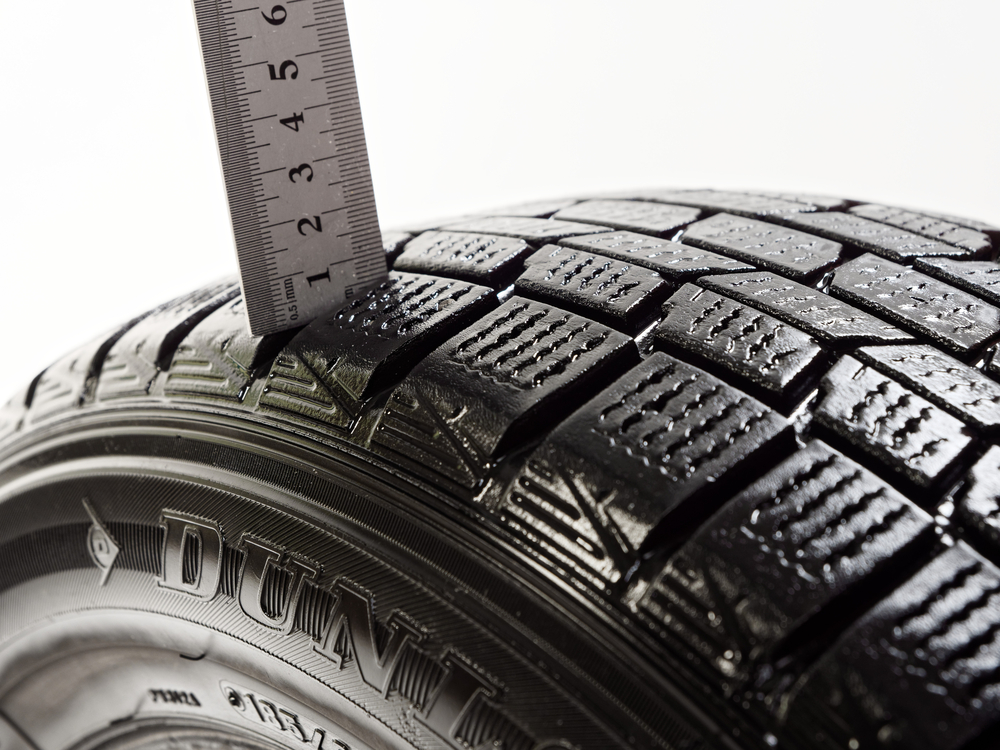
The lifespan of your tires depends on a variety of factors. The road conditions, climate, wheel alignment, tire pressure, and driving habits all contribute to wear and tear. The following signs will warn you when it's time for new Mazda tires. 1. Worn Treads Worn treads are extremely dangerous and will lead to unsafe driving conditions, especially in extreme weather. Checking the tread grooves on the tires are crucial for road safety, and if they are worn beyond the recommended tread depth levels, it is best to replace them immediately. more Tread Depth Requirements New tires have 10/32 inch tread depths. Trucks and SUVs may have deeper tread depths. The U.S. Department of Transportation prescribes a minimum of 2/32 inch tread for passenger vehicles. They recommend that you change your vehicle's tires at this depth. Indicator Bars Between the tread grooves are indicators or wear bars, to help you determine when you need to replace your tires. When the tread is flush with the indicator bar, replace the tires. The Penny Test This is an easy test to determine if the tires on your car need to be replaced. Slide a penny into several of the tire tread grooves and see how deep it goes in. Turn the penny so that Lincoln's head is down and his body is between your fingers. If you can't see the top of his head, your tread is good. If you can see his whole head, it's a sign that you need new tires. Tread Depth Gauge Stick the probe of the gauge into the shallowest groove, press the shoulder of the probe flat against the tread, and see what the measurement is. If it is at the minimum or lower than the recommended depth, get the tires changed. 2. Different Signs of Wear If there is wear around the whole tire, it is normal but still needs to be replaced if the grooves are shallow. Wear in the center of the tires indicates overinflation, and wear on the shoulder is a sign of underinflation. If the tread wear is uneven, it is caused by poor wheel alignment, and if the wear is on the side, it is an incorrect camber angle. A knobby outer section indicates problems with the toe-in value. All of the above are signs that it's time for new tires. 3. Cracks Crack on the sidewalls or base of the grooves is usually caused by rough road conditions, extreme temperatures, and under or over inflations. If any surface cracks are visible, it is not something to worry about immediately, but when they get deeper replace the tires. 4. Bubbles and Bulges When you see bulges or bubbles, it is caused by damage to the inner lining of the tire. This is a sign that you must change the tire immediately. 5. Vibrations If you feel vibrations when you are driving at any speed, do not ignore it. It may be a sign of tire damage or excessive wear. Take your car for a tire check. Worn tires are not safe. The moment you see any of the above signs, let a Mazda technician check the tires. Contact Flood Mazda today. Our expert technicians will do a thorough tire inspection to ensure that you are safe on the road.

Mazda_Transmission_Repair_8_Reasons_You_Cant_Ignore_Transmission_Problems_637400805164338357

Mazda Transmission Repair: 8 Reasons You Can't Ignore Transmission Problems

Suddenly your car does not feel quite the same, and you hear strange noises and smells coming from your vehicle. This might be a sign that your car has a faulty transmission. Please do not ignore the problem because it could lead to irreparable damage and expensive transmission repair. The following reasons will give you a good indication of why it is imperative to not ignore transmission problems and get it repaired fast. 1. Transmissions Are Expensive to Replace The moment you think that there is a problem with the transmission, you should take it to a certified technician immediately. Ignoring the problem will lead to extensive damage. Transmission replacement is a costly affair, so act fast when you suspect you have a problem. more 2. You Can't Drive Your Vehicle The transmission is a vital part of your vehicle and keeps your car moving. If you do not attend to a transmission problem quickly, you will soon not be able to drive your car at all. The longer you drive your car, knowing that your vehicle has a faulty transmission, the more costly the repair will be, not to mention the replacement. 3. You Will Damage the Gearbox The transmission fluid lubricates the gears and prevents grinding. If your vehicle has a transmission fluid leak, it will damage the gearbox, and it will be hard to shift gears smoothly. This can lead to extensive damage. We recommend that you get your vehicle repaired as soon as you notice fluid leaks. 4. Your Vehicle Will Perform Sluggishly Your vehicle will not have power and poor acceleration. It will feel as if your vehicle is lazy, sluggish, and does not want to speed up. The engine will also sound lower-pitched than usual. 5. You Will Struggle With the Gears The transmission will not engage or will slip in and out of gear. You will have difficulty changing or putting your vehicle into gear, and this will make it impossible to drive. 6. Faulty Transmission Could Cause Accidents If the gears are slipping and not engaging properly due to wear and tear and worn out transmission fluid, it could be dangerous and lead to road accidents. That is why it is so important to take your vehicle for repair when you have a faulty transmission. Don't wait until it's too late. 7. Your Vehicle Will Start to Jerk and Shake Your vehicle will shake and jerk when you put it into gear to move forward. You will also hear grinding when you shift gears. This will damage the transmission even further. Our best advice is to get your car to a technician immediately. 8. The Transmission Will Overheat Transmission fluid is needed to keep the transmission at the correct operating temperature. If there is not enough transmission fluid, it will cause friction between the moving parts, and it will overheat. You will smell burnt transmission fluid, and in some extreme cases, even see smoke. Do not risk further damage and costly repairs and replacements. Act fast and get your car serviced asap. Visit Flood Mazda today. Let our expert technicians service your transmission for complete peace of mind.

Items to Include on Your Tune-Up Checklist

Items to Include on Your Tune-Up Checklist

When drivers think their car needs a tune-up, that can cover a variety of things, but it usually means they are concerned about some aspect of the vehicle and want to make sure everything is running smoothly. Regular maintenance and tune-ups extend the life of your car, help keep you safe, and can even avoid costly repairs. So, where do you start when considering the overall health of your vehicle? Here are some items to make sure you include on your tune-up checklist. Ignition Parts If you haven't had your engine looked at in a while or you noticed it stalling or having trouble starting, the ignition needs some attention. The ignition system includes spark plugs, wires, coils, and a distributor cap and rotor. If any of these parts aren't functioning properly, the engine won't run as efficiently as it should and could end up damaged over time. Take your vehicle to an auto service place and ask them to check over the ignition parts. Replacing old spark plugs or ignition coils is much easier and more affordable than replacing an entire engine. more Fluids Several different fluids work inside your vehicle to keep things running clean and smooth. Routine fluid replacements, refills, and flushes are a great way to make sure your car stays healthy. Be sure to include brake fluid, coolant, motor oil, power steering fluid, and transmission fluid on your tune-up checklist. Sometimes a fluid level simply needs to be checked and maintained, which is easy to do at home. But, system flushes and replacements are good for a professional to handle. Belts and Hoses Every car uses several types of belts and hoses to transfer fluid and power. These items undergo normal wear and tear over time and should be regularly checked and replaced when necessary. If one of the engine hoses isn't working properly, the engine could overheat. A belt tensioner makes sure the belts stay in the right position, preventing uneven or premature wear. Worn belts can break and cause major damage and even dangerous driving situations. Ask a certified mechanic to look over your serpentine belt, belt tensioner, timing belt, radiator hoses, heater hoses, and hose clamps. Filters Air and fluid filters keep particles and contaminants from entering important systems in your car. Dirty or clogged air and oil filters reduce performance and efficiency. Cabin air filters help keep the air you breathe inside your car clean and fresh. Changing this filter is easy and should be done regularly. You may be shocked to see how dirty your cabin air filter is if you haven't replaced it in a while. Other filters to add to your checklist include the fuel filter, PCV valve, oil filter, and the engine air filter. Sometimes your car doesn't just need a tune-up, it needs to be replaced. If you're ready to enjoy all the perks and comfort of a new car, head to Flood Mazda and check out their wide selection of new models and consider trading in your old model.

4 Signs You Should Change Your Engine Air Filter

4 Signs You Should Change Your Engine Air Filter

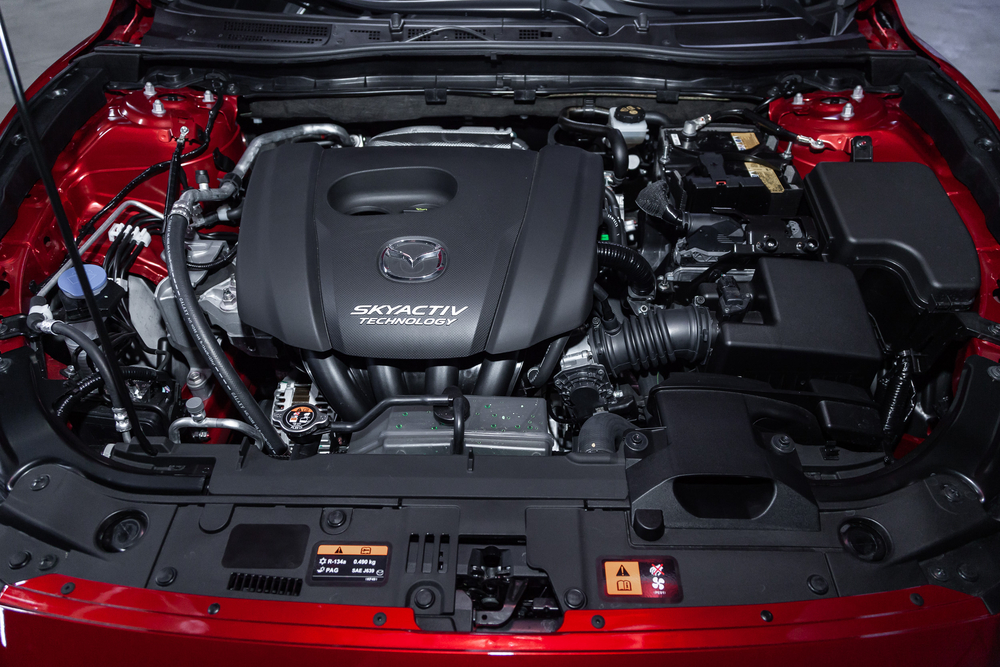
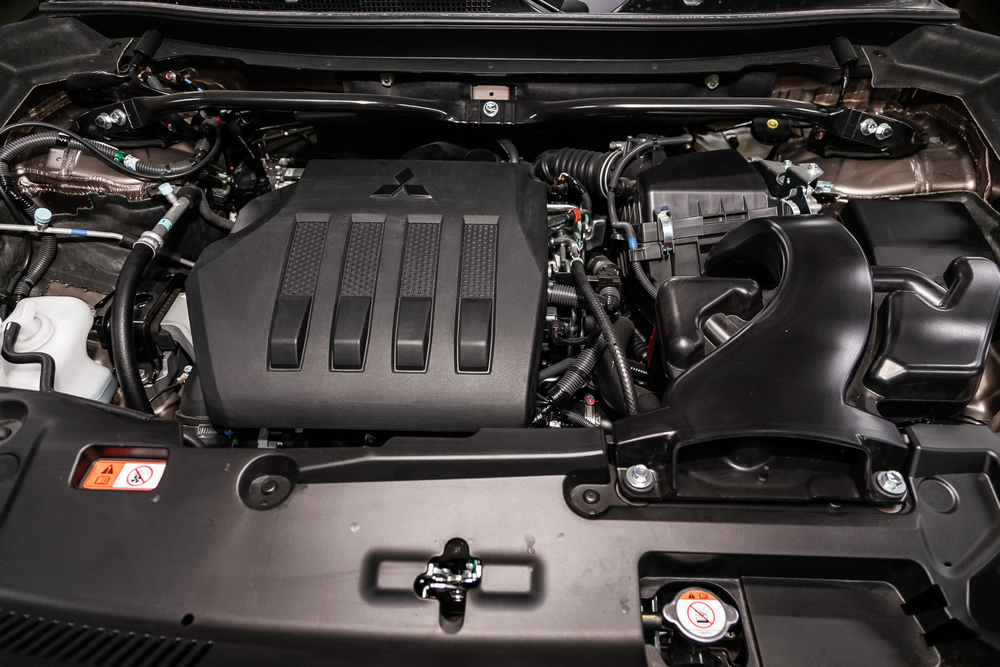
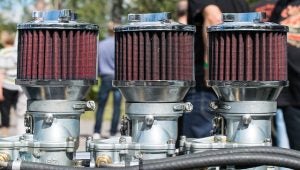
An engine air filter keeps dust, particles, and contaminants out of the engine as it runs. An excessively dirty or clogged filter isn't good for the engine and can lead to major issues down the road. Even though an engine air filter plays such an important role in proper engine function, it is easily overlooked. However, filters are easily replaced and inexpensive. Here are four signs that you should change your engine air filter. Check Engine Light Any time the check engine light comes on, many drivers panic and assume there's a major, costly problem. The issue frequently requires a simple fix, like a new engine air filter. When you see this indicator light, pop the hood and locate the air filter. In newer cars, it looks like a box with clips or fasteners that can be unhooked or unscrewed to gain access. Open the box, find the filter, and pull it out. more Visible Dirt If you run your hand across the filter and your hand ends up dirty, it's time for a new one. A small amount of dust can be knocked off by hitting the back of the filter. The more dirt and dust you can see on the filter, the less air can pass through to the engine. The purpose of the filter is to keep the things it catches from getting into the engine, so it's good that it's dirty because it means it's working, but it also needs to let air through. A clean air filter is white or light yellow, so as it catches dirt and dust over time, it will become darker. It if looks dark and brown or gray, it probably needs to be changed. Be sure to check your filter in good lighting. Decreased Horsepower A problem with decreased horsepower could be as simple as a clogged engine air filter. If air isn't flowing through the engine, it can't perform well. If you feel like the vehicle is having trouble accelerating well or it's jerking when you step on the gas, you might just need to give it a clean filter for more air. If the filter is in bad enough shape to affect the performance of your car, you shouldn't let it go unchecked much longer. Don't miss out on an enjoyable drive when you can easily fix the problem. Fuel Efficiency Loss An efficient engine is a clean and well-maintained engine. If any parts of the engine system aren't doing their job, it won't run efficiently. When an engine isn't getting the oxygen it needs to run, it will consume more fuel to compensate. Fuel is also wasted due to a lack of airflow. The excess fuel that couldn't burn without the necessary oxygen travels out the exhaust system and you might notice a gasoline smell when you start the engine. If you think you need a new air filter, head to Flood Mazda's service department for quick and easy service. Take some time to browse their selection of new Mazda models during your visit. You might even want to take a test drive or two. Image by Jarkko Mänty from Pixabay

Contact Us

Fill out this form below and we'll contact you shortly
*Required Fields