Blog / Wakefield Mazda Service

Blog

All Wakefield Mazda Service Wakefield Mazda Dealer Vehicle Maintenance Vehicle Safety Things to do in Wakefield Fun places in Rhode Island Mazda CX-5 Mazda3 Things to do near Wakefield Mazda CX-9 Vehicle Advice Restaurants near Wakefield Vehicle Financing Mazda CX-30 Mazda Miata Mazda6 Mazda CX-3 Mazda MX-5 Miata New Mazda3 near Wakefield Mazda3 Hatchback New Mazda6 in Wakefield Family activities New Mazda Miata MX-5 in Wakefield RI
Mazda engine

3 Engine Problems You Should Only Fix at a Mazda Dealer

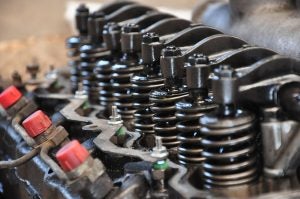
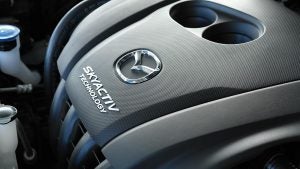
Engine problems can be tricky to diagnose and complicated to repair. If you have a problem with your engine, the problem must be fixed by technicians who know and understand your engine. As your Mazda dealer in Wakefield, RI, we have the specialist skills, parts, and technology to repair any possible engine problem. These are just a sample of the problems we can repair for you. more Your Engine Won't Start If your engine won't start, you are missing valuable time you could be enjoying driving in your Mazda. When you hit the starter button, your battery sends a powerful electronic charge to the solenoid in the starter motor. This charge powers the starter, which then cranks your engine. Once the engine cranks, it'll turn over almost immediately. If your engine doesn't start, the problem could be with the starter, the battery, or the alternator. If your battery is old and failing, it may not be able to retain a charge. Without the ability to charge the solenoid, your engine won't start. A failed starter solenoid won't pass the energy it receives to initiate the crank, and your engine won't turn over. The problem could also be a weak alternator. The alternator charges the battery, but if the alternator is failing it can't provide enough power to the battery. The Engine Is Overheating Your Mazda engine runs at a temperature of between 185 F and 230 F under normal operating conditions. This high temperature must be controlled to prevent damage to your engine. Your cooling system provides the perfect mechanism for keeping your engine working at a safe temperature. If the temperature gauge on your dash starts to climb, this means there's a problem with your cooling system. There are many reasons your cooling system can fail, including a cracked radiator, worn hoses, or a coolant leak. Another possible cause of overheating is a cracked head gasket. The head gasket is the main seal between the engine block and the cylinders. Its job is to prevent oil, coolant, and engine gases from mixing. If these substances mix, your engine temperature will rapidly climb. Sensor Failure Your Mazda contains numerous sensors, each of which is attached to an important engine component. These sensors monitor their component and continually update your car's computer. Your computer depends on accurate information for combustion, acceleration, and a host of other activities. If a sensor fails, it can transmit the wrong information. The oxygen sensor in your catalytic converter is a good example. It monitors the level of oxygen in your engine. This information allows your computer to calculate the exact amount of fuel to release to maintain a good air-fuel mix. If the sensor sends incorrect information, too much or too little fuel will enter the cylinders. The result of this error will cause reduce your engine power or cost you more in gas. If you experience any problems with your engine, call us immediately at Flood Mazda.
engine coolant

How Can You Tell When Your Car Needs Antifreeze?

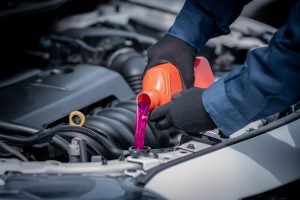
Your Mazda dealer has witnessed many vehicle maintenance mishaps related to car antifreeze. Find out how you can prevent your own auto headache by using this important substance quickly and appropriately. more Role of Car Antifreeze Antifreeze is an integral part of the coolant that helps regulate the temperature of your car's engine. It works in much the same way as dual-zone climate control works on every new Mazda, from the popular Mazda CX SUV line to the practical Mazda 3 to the sporty Mazda MX-5. While you're keeping yourself and passengers comfortable with user-friendly tech, antifreeze is busy keeping your engine comfy. The following problems could signal that your vehicle is running low on this helpful liquid substance. Inoperable Engine The term antifreeze refers to the substance's contribution to ensuring your engine does not freeze up during colder weather. As coolant consists of both antifreeze and water, the water component is in danger of freezing as the temperature drops. This consequence will impact the engine's ability to start up your car. If your vehicle remains outside during winter or if you keep it in prolonged storage in a cold environment, the chances of the engine freezing increase significantly if antifreeze levels are low. If your engine does not start, you will likely need an infusion of antifreeze. Overheating Engine In addition to keeping the engine from freezing, antifreeze also helps regulate temperatures on the higher end. The internal combustion that takes place may be integral to providing power, but these tiny explosions also create significant heat within the engine. Antifreeze keeps this heat at an acceptable level. In the absence of antifreeze and coolant, temperatures within the engine can spiral out of control, leading to the engine overheating. You will likely notice this effect when the engine indicator signal lights up on your dashboard and the overheating indicator begins to move strongly toward the red area. In addition, steam may start coming from underneath your hood. Any of these circumstances will likely necessitate more antifreeze. Engine Damage Antifreeze also acts as an anti-corrosion tool and lubricant for your engine. Therefore, if parts of your engine show damage, the effects may be due to a lack of antifreeze. For example, you may note worrisome corrosion on especially vulnerable metal components, such as the engine's aluminum cylinder heads. In the event of noticeable engine damage, antifreeze addition should be a top priority. Mazda Dealer Maintenance Schedule Checking antifreeze levels, draining old antifreeze, and replacing it with new antifreeze at regularly scheduled intervals can help keep your vehicle in prime working order. A good rule of thumb is to check levels right before summer and right before winter to ensure you have enough antifreeze for extreme temperatures. You can check these levels by observing the fill line on the plastic tank at the radiator or coolant reservoir. Also, make sure the antifreeze doesn't appear sludgy. The owner's manual of your specific vehicle can provide recommendations on exactly when to replace old antifreeze. On average, replacements occur between 30,000 to 60,000 miles of driving. Antifreeze checks can also be incorporated into your car's service schedule, which is beneficial because common issues that cause antifreeze leaks like cracked radiator hoses can be more easily detected. Keep your antifreeze levels and your engine healthy with the aid of a trusted service department. Contact the qualified technicians at Flood Mazda for a service appointment today.

car engine

Is Your Engine Leaking? 4 Possible Reasons

Engine oil is the lifeblood of your engine. It lubricates all of the moving parts and keeps them working efficiently. Your car consumes oil as it operates, so it's important to keep an eye on your oil level. An engine leaking oil is serious, as a lack of oil can cause catastrophic damage to your engine. As your Mazda dealer, we'd like you to know some of the reasons that it's leaking. more Oil Pan Gasket The oil pan gasket fits underneath your engine, and it creates a seal between the oil pan and the underside of your engine. This seal prevents oil from leaking out of the pan as it circulates through your engine. This seal is checked as part of your Mazda service schedule to ensure that it's in good working condition. If it's not checked regularly, over time, this seal can get damaged, and oil can leak out. Timing Chain Cover and Gasket The timing chain in your car synchronizes the turning of the crankshaft and the camshaft. This synchronization is essential, as it ensures that your valves open and closes at the correct times about the position of the pistons. The four steps for combustion require a smooth operation of pistons and valves. Incorrect timing can cause misfires or even damage to your engine, catalytic converter, or exhaust system. The timing chain is lubricated with oil and protected by a strong cover. The gasket fits into the cover and ensures that the oil stays inside the cover. This gasket can wear, and if it does oil can leak out. The cover itself can also suffer damage. In both cases, an oil leak will cause damage to the chain and cause difficulty with combustion. Front and Rear Crankshaft Seals The crankshaft sticks out slightly to the front and back of your engine. It provides mounting positions for the flexplate that connects your engine to your transmission, and the harmonic balancer that reduces engine vibrations. The crankshaft has a seal at the front and the back to prevent oil from escaping the engine. If either of these seals cracks or wears out, the engine oil will leak out of the crankshaft. Valve Cover Gasket The valve cover sits on top of your engine, and it protects the cylinder head from damage. The valve cover gasket fits between the valve cover and the cylinder head to ensure a perfect fit and prevent oil from leaking out. As with any gasket, it can wear over time, and oil will seep out. We check this gasket as part of your regular service schedule. There are several other places that oil can leak from, including cracks in any part of the engine or connections between sections. Any oil leak is potentially serious, as a lack of oil can easily lead to your engine overheating. If you see an oil leak, or you suspect you have one, call us ASAP at Flood Mazda.

4 Reasons Not to Ignore a Cracked or Chipped Windshield

Your Mazda dealer has seen first-hand the consequences of a cracked or chipped windshield. Find out why you should never ignore this not-so-minor problem. more 1. Safety Concerns A large crack in a windshield can obstruct the driver's view and create a hazard on the road. This scenario is especially likely if the crack appears in the form of a starburst, wherein several cracks branch out from an impact point. A crack may, in turn, cause light to reflect into the driver's eyes, impairing the ability to see surroundings even more. In addition to the potential of causing an accident, a severely cracked windshield may also shatter and make glass fragments fall onto the driver or passengers. These fragments can cause cuts, blood loss, and eye damage. 2. Legality Several laws are on the books to enhance vehicle safety, from required seatbelts to functional headlights and taillights. Drivers may be pulled over and cited by a police officer for violating these guidelines. Since a damaged windshield reduces the driver's visibility, it could be a legal infraction worthy of a citation. If your vehicle must undergo a safety inspection for registration or renewal, a visibly cracked windshield can likewise hinder your chances of passing the inspection. 3. Structural Integrity Modern windshields are a vital stabilizing force for the entire vehicle. They provide support for the roof and are integral for auto safety. A crack that suddenly appears in the absence of an impact (known as a stress crack) could signal a larger overall problem with the vehicle itself. Mishaps in the manufacturing of a vehicle, for example, can lead to stress cracks along the windshield's edges. Keeping a close eye on your windshield's health can give you valuable insight into your auto's overall health. One IHS Top Safety Pick you won't have to worry about in regard to health and stability is the sporty Mazda 3. This stylish vehicle comes equipped with safety-enhanced glass, ultra-durable rain-sensing windshield wipers, and a camera and alert system that gives you and your ride an extra set of eyes. 4. Costly Repairs A chip or small crack in the windshield may seem inconsequential at first, but if left untreated, this aberration can quickly grow into a significant issue. Both heat and cold can alter the structure of glass, so rising or falling temperatures can play havoc with cracks or chips and cause them to expand. Prolonged exposure to the elements, whether it be constant sunlight or precipitation, can also worsen cracks. Other factors like windshield wiper pressure and even subtle movements of your vehicle can compound cracks as well. For these reasons, even the smallest chip may become a massive crack. The longer you wait to fix the issue, the greater the chance you will have to shell out plentiful money. In the worst case, the windshield may need to be replaced entirely. Do-it-yourself attempted fixes may only worsen the problem, so qualified professional assistance is best. Don't let your minor inconvenience transform into a hazardous and money-draining expense. Contact the expert service team of Flood Mazda for efficient and effective maintenance.

Brake repair

How Often Should You Replace Your Mazda's Brake Pads?

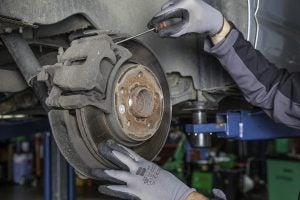
Brake pads are a very important part of your braking system. They provide additional friction to allow your car to stop faster. They also help to protect parts of your braking system from damage. These pads will wear out, and they need to be replaced regularly. As your Mazda dealer, we'd like you to know how often they need to be replaced. more How Long Do Pads Last? Pads are usually about 1/2" thick when they're new. Each time you use your brakes, the pads wear slightly. When they reach a thickness of 1/4", it's time to think about replacement. The time it takes for your pads to reach this thickness depends on numerous factors, including weather, driving conditions, and driving style. On average, your pads need to be replaced every 20,000 to 60,000 miles. Your brakes are serviced according to your car's service schedule, and this is generally every 12 months or 12,000 miles. Our technicians will check your pads as part of the routine service for thickness and signs of wear. Pad will always show signs that they're wearing, and this gives you time to replace them. Signs Your Pads Are Wearing Out Glazed Pads The surface of a new pad is rough, and it needs to be to generate friction against the rotor. If a pad is held in contact with the rotor for too long, this contact will smooth the pad surface and will wear a smooth section on the rotor. This close contact can happen due to a damaged caliper that keeps the pad too close to the rotor or if you are riding your brakes. If you regularly drive downhill, for example, and you keep your foot on the brake, this can cause your pads to glaze. Glazed pads won't provide good stopping power as they lack the necessary abrasive pressure. We can't repair glazed pads, but we can replace them for you while you wait. Vibrating Pedal A vibrating pedal can mean that the pads are wearing unevenly, or that they have caused a buildup of material on the rotor. Sometimes when pads have been exposed to high temperatures and constant friction, pieces of the pad can brake off. This will cause the pad to become unbalanced, and it will cause vibrations when it grips the rotor. Grinding Noises The friction material on the pads will eventually wear off if the pads aren't replaced. When this happens, the metal caliper will grind against the metal of the rotor. You'll hear an awful metal-on-metal noise, and this is a sign that your rotors are being damaged. If you hear grinding noises, it's vital to have your pads replaced immediately to prevent serious damage to the rotors. Worn pads are dangerous and could result in an accident. If you have any brake problems, call our service department right away at Flood Mazda. Our highly-trained technicians will find and fix the problem. Image by Gerald Oswald from Pixabay

mazda miata collision

5 Keys to Getting a Quality Collision Repair for Your Mazda

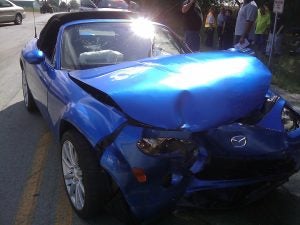
Any accident can be an overwhelming experience. Once you know that you and your passengers are safe, the next thought is how do you get your car repaired. As your Mazda dealer, we can help you. Whether is chipped paint, a fender bender, or a more extensive repair, we've got you covered. We'd like you to know the steps involved in getting a collision repair with us. more Arrival When you and your vehicle arrive at our repair center, our technicians will examine the damage. They will thoroughly document the damage they find so we can prepare a detailed plan for repairing it. While our technicians examine your car, we'll confirm your details are correct and check-in your car. We'll also get your insurance company's details so we can liaise with them about the repairs. We are dedicated to providing you with the best customer service possible, and we can help you with any questions. We'll keep you informed as your repair progresses. Once your car is checked-in, we can give you a ride home, or if you'd like to rent a car, we have the facilities available. Disassembly Our technicians will remove all of the damaged parts. This will give us a clear indication of the full extent of the damage. Once this step is completed, we'll prepare a quote for the cost and time to complete the repairs. We'll liaise with you or your insurance company depending on who is arranging the repair work. Once we receive a confirmation to start the work, we'll move to the next step. Repair Our parts department will assemble all the pieces needed to fix the damage, and any parts that need to be painted will be sent to our painting section. We can color-match any Mazda paint so the new parts will be indistinguishable from the originals. Depending on the number of repairs needed, our technicians may work on the interior and exterior of your car at the same time. This will speed up the process so we can complete your repair sooner. Our technicians are experts at repairs, and they will thoroughly document all of the work they complete. We will keep you informed of the status of the repairs as it progresses. Reassembly All the parts that need replacing will be freshly-painted, and our technicians will fit them. We'll also complete any light paintwork like touch-up scratches at this stage. The new parts will blend seamlessly. Once your car is fully repaired, our quality control department will check the standard of the work to ensure it meets Mazda's high standard. Once this step is complete, your car will be thoroughly cleaned. Return We'll let you know your car is ready for collection, and we know you'll be pleased with its now pristine condition. Once you're satisfied, your car will be ready to go. If unfortunately, your car suffers any damage, you need experts to fix it. Call us right away at Flood Mazda. Image by Rhonda Jenkins from Pixabay

car warranty contract

4 Things in Your Car Warranty When You Buy From a Mazda Dealer

When you buy a new vehicle from your Mazda dealer, you want to know that you're getting the very best coverage for your investment. Here's what's in the car warranty from Mazda. more Limited Warranty This warranty covers everything, and its purpose is to protect you in the unlikely event that there was a manufacturing problem with your vehicle. This warranty is valid as long as you keep to your scheduled maintenance intervals--that's because scheduled maintenance ensures every part functions the way it should. If some of the parts aren't maintained properly, they may not perform as they are intended for as long as intended. For new vehicles, this warranty is for three years or 36,000 miles, whichever comes first. It covers any and all defects in workmanship or in materials. It's also transferable for all new vehicles sold in the United States. Powertrain Warranty The powertrain is the heart of your car, and your warranty here is for five years or 60,000 miles, whichever comes first. The powertrain includes the engine, the transmission, and the drivetrain. These are the most important elements of any vehicle and should offer high-quality performance as long as they are maintained properly. This warranty is also transferable so long as the vehicle was sold and serviced in the US. If you have an RX-8 vehicle, you also get the RX-8 Rotary Engine Core Limited Warranty Extension. This covers all the core components of your RX engine for up to eight years or 100,000 miles. Emergency Roadside Assist (24/7) Your new vehicle is covered for three years or 3,000 miles with this program. If any Mazda part failure makes your vehicle undrivable, not only are you covered for repairs under the warranty above, but you're also going to get a free tow from Mazda to the nearest Mazda collision center to get the needed repairs done quickly. Parts and Accessories If you have any repairs or maintenance done, all the parts are covered so long as they are genuine Mazda parts. This includes new and remanufactured parts. So long as they were installed by a Mazda technician at your dealer, they fall under the same warranty coverage as the original parts. So, for example, if you still have 20,000 miles on your limited warranty when you need a new part put in, that new part is also covered for the remaining 20,000 miles. If you're having parts replaced on a vehicle that's already out of warranty coverage, the new parts are covered for 12 months or up to 12,000 miles for all Mazda vehicles manufactured in 1996 or later. Labor costs for replacing the part are also covered. There's a lot to love about a Mazda, and the warranty on is just one of the best. Come see us at Flood Mazda toda y to look at all your options for quality new and used Mazdas. Or, talk to us about getting fast, professional service for all your repairs and maintenance needs. Image by aymane jdidi from Pixabay

Tire rotation

7 Big Benefits of Getting a Tire Rotation

You may think that rotating your tires is a waste of time, but it isn't! Your tires should be rotated every 5,000 to 7,000 miles for optimal benefits. Learn seven important reasons to visit your Mazda dealer for regular tire rotations. more 1. Your Tires Will Last Longer Your front tires wear out almost 50 percent faster than your back tires. When you rotate your tires regularly, you help the tread on them to wear more evenly. This not only negates the need for replacing your front tires more often, but it also helps all your tires last longer. 2. You Get a Safer Ride When the tread on your tires is worn down unevenly it can create a safety hazard. Your tires may not be able to grip the road properly in wet conditions which could lead to an accident. Uneven wear can also potentially lead to your tires being different sizes, which can affect the suspension of your vehicle and create some costly damage. For the safety of your family, and everyone on the road, ensure you get your tires rotated regularly. 3. You Feel More Comfortable When You Drive If the tread on your tires becomes uneven it can make your car shake when it drives and can even lead to damage to your vehicle. Rotating your tires regularly ensures you always have a smooth, comfortable ride. 4. You'll Hear Less Noise When You Drive Unnecessary vibration can be created by uneven tread wear on your tires. If you hear a lot of excess noise, feel vibrations, and have trouble steering, even if you're on a smooth road, chances are your tires are unevenly worn. 5. You Get Better Fuel Mileage Uneven wear on your tires can create resistance when you drive, which can use extra fuel. Rotating your tires regularly will mean you feel less resistance when you drive, get a smoother ride, and get more time between gas tank fill-ups. 6. You Feel More in Control When You Drive As mentioned before, tires that lose tread can slip in rainy or snowy conditions and create an uneven ride. This can affect how you steer your vehicle as well as reduce your response time in an emergency. When you regularly rotate your tires they wear out evenly and keep you in control on the road. 7. Your Mazda Dealer Will Ensure It's Done Correctly You must make sure your tires get rotated properly. This means your tires aren't simply being moved back and forth on the front and/or back. Your dealer will keep track of your rotations and ensure your tires wear evenly. Flood Mazda is proud to be an award-winning dealership serving the fine folks of Rhode Island. We offer all the new Mazda models, quality used vehicles, financing services, and an outstanding service department. Visit or stop by Flood Mazda today to view our inventory of vehicles, discuss financing options, learn about the features of your vehicle, or book your next maintenance appointment. Image by Mylene2401 from Pixabay

transmission service

What Happens During Routine Transmission Service?

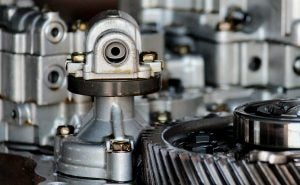
When it comes to our vehicles, routine transmission service is one of the most important things we can do to keep them running smoothly. But what does that entail? We'll break down everything consumers need to know about what happens during a typical service appointment. And when you're ready, schedule an appointment with your Mazda dealer to get the best service for your Mazda! more Why Is Your Transmission Important? The transmission system is an automated series of gear sets used to transfer the power from the engine to the driving wheels of a vehicle. A transmission has several parts, including gears that are used to transfer torque from the motor to the wheels. Your transmission is one of the most critical components of your car, therefore, it's imperative to ensure it's in good shape for the overall health of your vehicle. What Is This Routine Service? Servicing your transmission is a proactive maintenance procedure. It can help keep your transmission humming and prevent any major issues down the road. This can also prolong the life and reliability of your vehicle's transmission. Why Would You Need To Get This Service for Your Vehicle's Transmission? The transmission fluid in your engine is composed of many different liquids and metal parts. This mixture needs to be kept clean and properly maintained so that it will work as designed. Over time, this fluid becomes dirty and, if unserviced, will create issues with the way your vehicle operates. Benefits of this service include smoother shifting and reduced friction between moving parts within your car's transmission system. These improvements can help increase the lifespan of your vehicle, as well as reduce wear and tear. What Should I Expect in This Routine Service? This routine service includes a detailed inspection. During this inspection, an expert checks for leaks or other possible damage not visible from outside the vehicle. This routine service will also recondition seals and gaskets and change fluids and filters. Additionally, other services can be performed at the customer's request. A road test with a professional onboard evaluation can be completed. Also, any necessary repairs or replacements can be recommended once the full inspection has been completed. What's the Difference Between a Transmission Flush and This Service? Some customers may want to opt for a routine transmission flush throughout their vehicle's lifetime. However, this is a different service and should be treated as such. A transmission flush replaces all of the old transmission fluid with new fluid. Routine service for your transmission, on the other hand, restores a vehicle's automatic transmission to its proper working order. How Often and Who Should I Schedule an Appointment for This Routine Service? It's highly recommended that you see an expert that specializes in your type of vehicle for any routine service. Your dealer is your best option. This service should be performed every 30,000 miles or 24 months, whichever comes first. Getting your transmission inspected and serviced is an important preventative measure that all car owners should take to keep their vehicles running smoothly. During a routine service, your vehicle's automatic transmission will be inspected for damage and leaks. Contact Flood Mazda today to get your routine appointment scheduled! We're devoted to helping customers find the vehicle of their dreams!

car dents from hail damage

Do You Need to Repair Car Dents? Visit Your Friendly Mazda Dealer

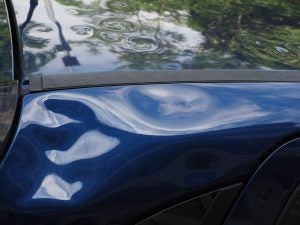
Don't put a dent in your driving experience. If you have car dents, your qualified Mazda dealer is here to help. more Common Car Dents The amount of repairs you'll need is largely dependent on the type of dent and the extent of the damage it inflicts. Following are a few of the more frequent dent types seen in repair and service departments: Minor Dings A small dent that measures around half an inch or less in diameter is your best of the worst when it comes to dents. This degree of damage is typically caused by a small object like a rock striking your automobile. The damage in these cases does not extend past surface level. Rounded Dents These dents usually appear more pronounced. They often result from large hailstones or balls of any sort hitting your auto. While shallow, the dents have a most noticeable circular groove appearance. Sharp Dents If a smaller object with more heft and sharpness—like a piece of metal—hits your auto with some force, the damage may be more extensive. The car metal underneath the surface panels may be harmed due to the deeper and more pronounced dent caused by the impact. Dents with Creases Many cars receive dents from handles, keys, other autos, or other objects impacting and then dragging across the surface. These types of dents are capable of causing the most harm because damage can get below the panel's surface. Also, the paint job is more likely to suffer and need some restoration. Paintless Dent Removal For more minor damage, the technique of paintless dent removal will often suffice. This process involves removing a dent from the car without the need to replace any body panels or add any paint to the vehicle. To accomplish this task, trained technicians use specialized tools to reshape and restore a faulty area by reaching it from the affected panel's backside. The process typically takes anywhere from 30 minutes to a few hours, depending on the number and degree of dents. Extensive Repairs A more serious dent or series of dents will likely necessitate a more detailed repair job involving fillers, chemicals, and re-painting. If the damage is very extensive, you may need to have one or more car panels replaced. You should check with your auto insurance company to see if you can get covered for your dent repairs. Mazda Dealer Professionalism Ignoring dents can be a costly mistake. If left unrepaired, a dent can lead to rusting and corrosion that seriously damages your auto's overall value. By the same token, attempting a do-it-yourself fix could become equally detrimental. A qualified Mazda technician is your best bet for identifying what type of dent the car has experienced and what type of specific repairs are needed. Further, a large percentage of these repairs require specialty tools and a skilled set of hands. Botching the job could end up costing you even more in the long run. Do you have an auto in need of repair? Visit Flood Mazda and let our high-rated expert service team take the dents out of your auto and your overall driving experience.

5 Reasons You Should Never Ignore Your Car Overheating

Is your car overheating without warning? Do you need to determine the cause of this issue and how serious it may be? There are several common reasons why cars overheat, leading to a quick fix or further repairs. Your Mazda dealer can assess your vehicle and determine how to prevent your car from overheating and resolve issues related to its cause. more 1. Worn Radiator Hose If you own a pre-owned car with an older set of hoses, they may wear over time, leading to poor performance, leaks, and overheating. If you notice coolant dripping on the ground and this fluid grows in size, this can mean you'll need to repair or replace the radiator hose. It's also important to check the metal circles and hose clamps to ensure they are in good condition or require replacement. 2. Overheated Engine Engines are equipped to handle temperatures to a certain level, though if they overheat or run at a high temperature for extended periods, this will cause issues. You may notice warped or melted cranks, pistons, metal, and other parts that can lead to severe damage. When consistent overheating occurs, this will not only damage your engine it may impact other parts of your car, which can lead to expensive repairs. 3. Thermostat is Stuck Open or Closed Your car's thermostat determines how much coolant flows to and from the radiator to the engine. When this mechanism becomes stuck in either a closed or open position, this may cause excessive coolant, or not enough of this substance, to flow from one system to the other. This issue can quickly lead to overheating and severe damage. If you notice your thermostat isn't working correctly, you may need to repair or replace it to prevent possible damage. 4. Broken Radiator Fan Radiator fans are essential in regulating temperature in your car and help cool your vehicle's antifreeze. If this fan stops working, your car will quickly overheat, and the fluid won't effectively cool as needed. If you notice your radiator fan is functioning poorly or stops altogether, it's essential to consult with your Mazda technician for required repairs or replacement. 5. Radiator Problems A coolant leak is usually caused by a broken radiator, which may become damaged or punctured during a collision. This issue can contaminate the oil, causing the engine to overheat and leak fluid, resulting in a complete shutdown unless quickly repaired. Fortunately, your local dealer expert can provide helpful tips on preventing damage to your radiator and how to remedy the situation if it happens. Your Mazda expert can provide the support and assistance needed to avoid situations where overheating may occur in your car and provide solutions to resulting damages. Come see us at Flood Mazda and inquire about our incredible showroom deals on your next visit to the area. We offer excellent pricing on new and pre-owned cars and expert maintenance services for all your driving needs.

mazda ac

Car Heating or Car AC Not Working? Get It Fixed at Your Wakefield Mazda Dealer

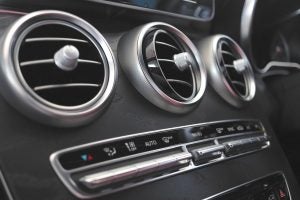
In very cold or very hot weather, there's nothing worse than your car heating or car AC not working. In fact, it can be dangerous to drive at the wrong temperature because you'll have a harder time concentrating. For this reason, it's important to always get in touch with your Mazda dealer as soon as you have a problem with the HVAC system in your vehicle. Let's have a closer look at what to do when you notice a defect. more Car Heating or Car AC not Working? What to Do Now It's a hassle when the heating system or AC in your car stops working. But fortunately, the highly trained technicians at your local dealership are able to repair your Mazda within a few hours. After you notice a problem, you can check the website to see what specials are currently available. Then, you can get in touch with the service center online or over the phone and book your in-person appointment. Check the Service Options on Your Mazda Dealer's Website The first thing you should do whenever you discover an issue with your Mazda is to check your dealer's website. In the "Service" section, there is a lot of information about the types of repairs we are able to perform and our center's opening hours. What's more, you can discover all the current offers, which could significantly reduce the cost of your repair. If you haven't been to the dealership in many months, it may be a good idea to combine your AC or heating system repair with a general service. We are currently offering a deal on a multi-point inspection, which is a service designed to ensure that your vehicle is safe. By having this done now, you can prevent further problems down the line. Bring Your Vehicle to the Dealership Once you've gathered the necessary information online, you can contact the dealership directly. If you live or work in the area, you can stop by on your way to or from your job. However, you can also reach us on the phone or via the online contact form. We promise to get back to you as soon as possible. Our technicians will book you in for an appointment, so they can inspect your car. They'll let you know what the problem is and give you a quote for the repairs. In most cases, an AC or heating system repair can be completed on the same day, so you can take your vehicle home with you. But you don't have to worry should there be a bigger issue. You can borrow one of our loaner cars for the duration of your repair, so your life won't be disrupted. Although the HVAC system in your Mazda is robust, you might experience an issue if you've had your car for a long time or you use the heating and AC a lot. In such a case, it's best to contact your dealership immediately because it isn't safe to drive a car that is very hot or very cold. Get in touch with us now at Flood Mazda in Wakefield, RI to book your appointment with the specialists at our service center.

Contact Us

Fill out this form below and we'll contact you shortly
*Required Fields