Blog / Vehicle Maintenance

How to Check the Oil Levels in Your Car

How_to_Check_the_Oil_Levels_in_Your_Car_637533055468918732

A great way to know when the oil in your car needs to be changed is to check it every time you fill your tank up with gas. If the oil is dirty or low, you should get your car into a service center for an oil change. However, you have to know how to check oil levels in your car so you know when it's time for service.

Step 1: Ensure Your Car Is on Level Ground

Your car needs to be on level ground so that you get an accurate oil level reading. If your car is tilted uphill or downhill, your reading will be skewed and you won't know if your engine needs more oil or not. When you're on level ground, the oil in its tank will also be level, giving you a decent idea of how much oil you currently have in your car.

Step 2: Open Your Car's Hood and Locate the Dipstick

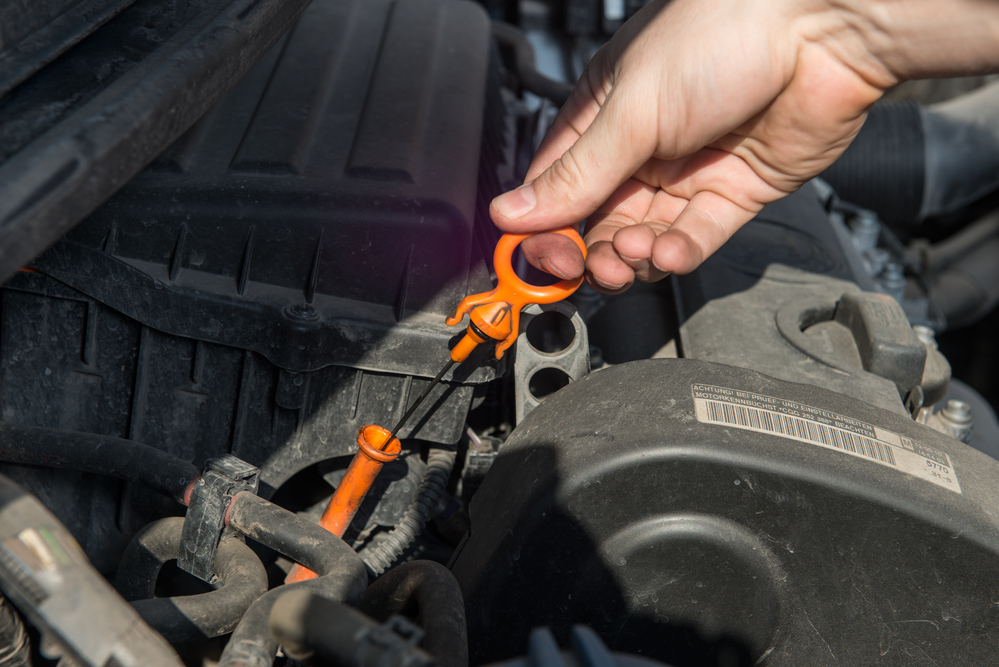
The engine oil compartment is located under the hood of your car, near the engine. You're looking for a loop or grip that's attached to a long, metal strip that resembles a skewer. The loop or grip will usually be stamped "oil" or it will be inserted in a tank that is marked as "oil." If you aren't able to find the dipstick just by looking, grab your owner's manual, which will show you where it's located.

Step 3: Pull Out the Dipstick and Wipe it Clean

You need to have a clean dipstick to make sure your oil level reading is accurate. So, begin by pulling the dipstick out of the oil reservoir and wiping it clean with a cloth or towel. Typically, gas stations have towels handy right near the pumps, and they are fine to use for this purpose.

Step 4: Reinsert the Dipstick, Then Extract it Again

Put the dipstick back into the hole that leads to the oil reservoir and let it sit for a few seconds. Remove the dipstick again, check the color, and read the level.

The Appropriate Oil Level

Every oil dipstick in every vehicle is marked at the end with oil level indicators to let you know if your car needs more oil or if it's full enough. There will be marks that indicate if your oil is full, down a quart, or down two quarts. If the oil hits either of the two lower marks, you'll want to add oil to your car (either one or two quarts, depending on your reading).

If there is no oil on the dipstick, get your car in for service immediately, as this is an indication that your car needs at least three quarts of oil. Since cars typically only take four quarts of oil, running on one quart or less is extremely dangerous.

The Appropriate Color of Oil

Clean oil is amber in color and will appear translucent on the dipstick. If your oil is dirty, it will be dark brown or black, and you won't be able to see through it to the dipstick. This means you need an oil change as soon as possible.

Learning to check your car's oil is an important skill all drivers should have. Once you check it, if you need more oil or an oil change, bring your car in for service sooner rather than later. Contact Flood Mazda for an oil change appointment today.

Posted in:

Related Posts

A blue Mazda SUV front facing

Transmission Service From Your Mazda Dealer

Your car's transmission takes energy generated by the engine and send it to the wheels. When this happens right, you get smooth acceleration and gear shifts. That means transmission service at your Mazda dealer is part of proactively keeping things running the way they should. more What Happens During Service Transmission service can involve inspecting, cleaning, and replacing various components and fluids within your vehicle's transmission system. What will happen will always be determined by what exactly you need. Some of what we might do includes: Fluid Replacement or Exchange Transmission fluid lubricates, cools, and facilitates gear shifts. Over time, this fluid can degrade, get contaminated with debris, and lose its effectiveness. If we just change it out, we'll drain the old transmission fluid and replace it with new fluid. While this does refresh the system, some old fluid may remain in certain parts, like the torque converter. That means sometimes a fluid flush is the right thing. This is a more thorough method where a machine flushes out all the old fluid before new fluid is added. Filter Replacement The transmission filter traps contaminants and debris so they don't circulate through the system. Replacing the filter ensures that the new fluid remains clean and effective. Inspection We'll also do a thorough inspection to identify signs of wear, damage, or potential failure. We'll check seals, O-rings, and other parts that may need replacement. Signs You Might Need Service If you come get service as soon as you notice the early warning signs, you can prevent minor issues from becoming major, costly repairs: Delayed or Slipping Gears If you notice a delay when shifting gears, or if the transmission slips out of gear while driving, this could indicate low transmission fluid or worn components. Unusual Noises Grinding, humming, or clunking sounds coming from the transmission are not normal. They usually mean there are worn gears, bearings, or other internal issues. Burning Smell A burning odor, especially if you think you're smelling burnt toast, can indicate overheated transmission fluid. That shouldn't be happening, so come see us. Check Engine or Transmission Light Modern vehicles have sensors that detect irregularities in the transmission system, so if the light comes on, come see us. Rough Shifting Hard or abrupt gear shifts are never good. This might mean you have degraded fluid or mechanical issues. Having transmission issues? Come see us at Flood Mazda in Wakefield, RI today for help. Image via Mazda

A black Mazda parked inside

Battery Maintenance Tips From Your Mazda Dealer

Car batteries last for several years before they need to be replaced, and you should do everything you can to keep the battery in good condition so it doesn't need to be replaced sooner than expected. There are several types of battery maintenance that you can do at home to keep the battery in good health. Getting regular battery health checks from your local Mazda dealer is important, too. more Clean Your Battery Over time, grease and dirt can build up on your battery and cause corrosion. Corrosion leads to battery performance issues in some cases. So if you spot any dirt, grease, or corrosion on your battery, then you should clean it off. First, remove the negative cable and then the positive cable on your terminals. After that, scrub the terminals with a baking soda and water solution. You may also apply petroleum jelly to the formally corroded areas, as it may prevent corrosion in the future. Once done, attach the positive cable and then the negative cable to your battery. Drive Frequently Your car battery will die if you go a month or two without driving your vehicle at all. To make sure the battery doesn't die, drive your vehicle for at least 30 minutes every week. If you're going to be away for an extended period, then consider getting a friend to bring your vehicle out for a quick 30-minute drive every week. Check the Acid Bring your battery to the dealership every six months, so a mechanic can check the acid and electrolyte levels. This is especially important if you mainly drive short distances. If the mechanic finds your battery has low electrolyte levels and will no longer charge above 80 percent capacity, then they may be able to repair the problem without replacing the battery. Drive More Than 10 Miles If you exclusively drive very short distances, then your battery may not last as long as it could. Try to avoid driving less than 10 miles as much as possible, so your battery has time to recharge. Limit Electronic Use with No Engine Running It's not a good idea to use your car's electronic features when the vehicle isn't running. Doing so drains your battery. Occasionally leaving the radio on for your passengers while you run into a gas station to pay for fuel is fine, but avoid using the electronics for long periods while the engine is off. Want to check on your battery's health or get a new battery? Pay us a visit at Flood Mazda in Wakefield, RI. Image via Mazda

A Mazda SUV driving on a road

Fuel System Cleaning for Peak Performance in Your Mazda

If you want to maintain your Mazda's astounding fuel economy, then you must make sure your fuel system is in good condition. A fuel system cleaning at your Mazda dealer is the best way to ensure every ounce of fuel is used efficiently. more Your Mazda's fuel system is one of the most essential systems in the vehicle and is largely responsible for ensuring you can enjoy the fuel-saving benefits of your car. When your vehicle's fuel system is clogged, it makes it harder for the fuel pump to deliver gas to the engine, which can affect the acceleration and reliability of your vehicle over time. Cleaning the fuel system can usually be done by using a special cleaner that breaks down deposits and contaminates. The cleaner is added to the fuel tank to flush through the entire fuel system and is followed by a second cleaner that removes lingering carbon deposits from the combustion chamber in your engine. A mechanic may have to clean parts of your fuel system by hand to remove stubborn deposits that disrupt the airflow of your fuel system. How Your Fuel System Works Whether you drive a Mazda sedan or SUV, your fuel system is likely composed of parts such as fuel lines, fuel filters, fuel injectors, a fuel pump, and a fuel pressure regulator. If you drive a Mazda with a traditional combustion engine, your vehicle is powered by injecting fuel into the combustion chamber. The fuel is then ignited by a spark plug to produce the power necessary to drive. How Often Should You Clean the Fuel System at Your Mazda Dealer? Cleaning the fuel system should be done every 15,000 miles, which is about once a year for most drivers. If you drive your vehicle daily and rack up high mileage, you may need to have your fuel system cleaned more often to protect the fuel efficiency and performance of your car. It's a good idea to visit your dealership for fuel system service if you notice your Mazda has sluggish acceleration or you are struggling to start your car. If you are fueling up the car more often, this can also be a sign that your fuel system is clogged. Whether your check engine light has turned on or it's been a year since your last routine service appointment, the best thing you can do to promote your vehicle's fuel efficiency is to regularly clean the fuel system. Get in touch with Flood Mazda in Wakefield, RI to book a service appointment today. Image via Mazda